Building the Comic Strip
How Chester fit into the Newspaper
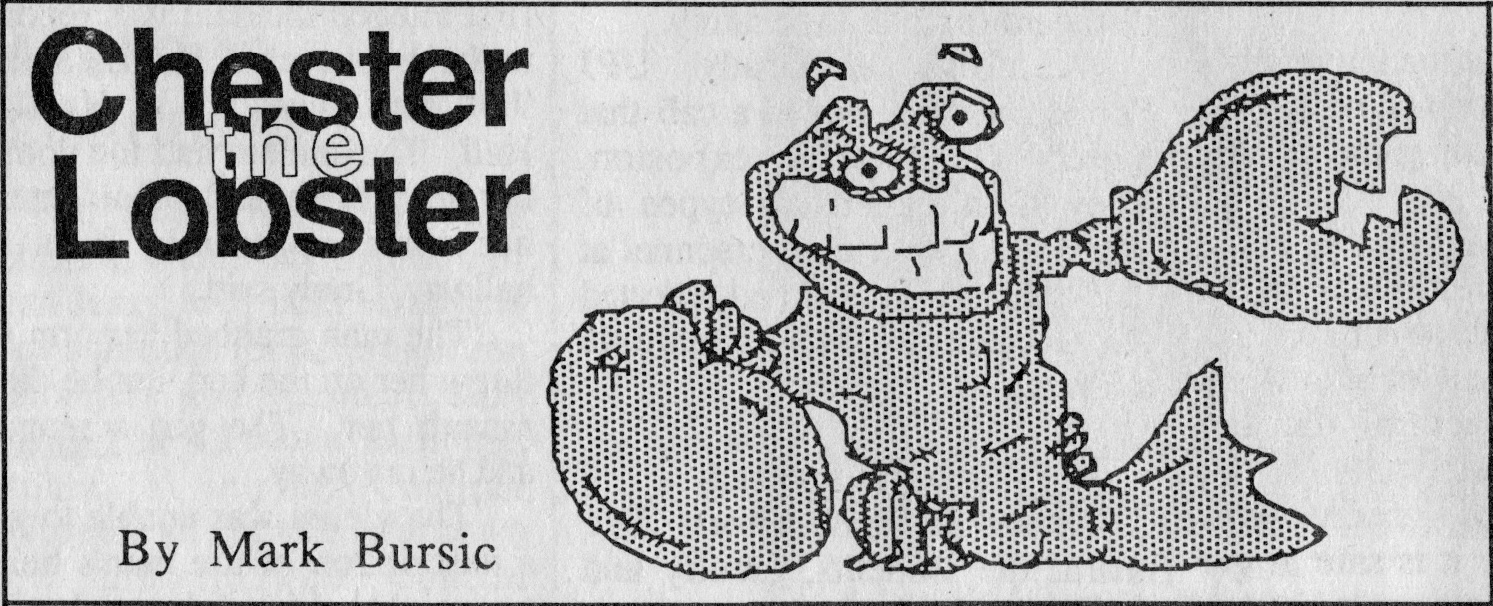
Chester the Lobster was conceived as an editorial cartoon for the newspaper’s opinion section. As such the weekly topic was selected by the editorial board and the strip was to compliment the main opinion article crafted by a board member.
Topics for the article ranged from campus life, activities, administrative policy, public safety and campus technology. Even though topics were different each week, the strip attempted to carry on themes that spanned several editions and wove in different sub stories.
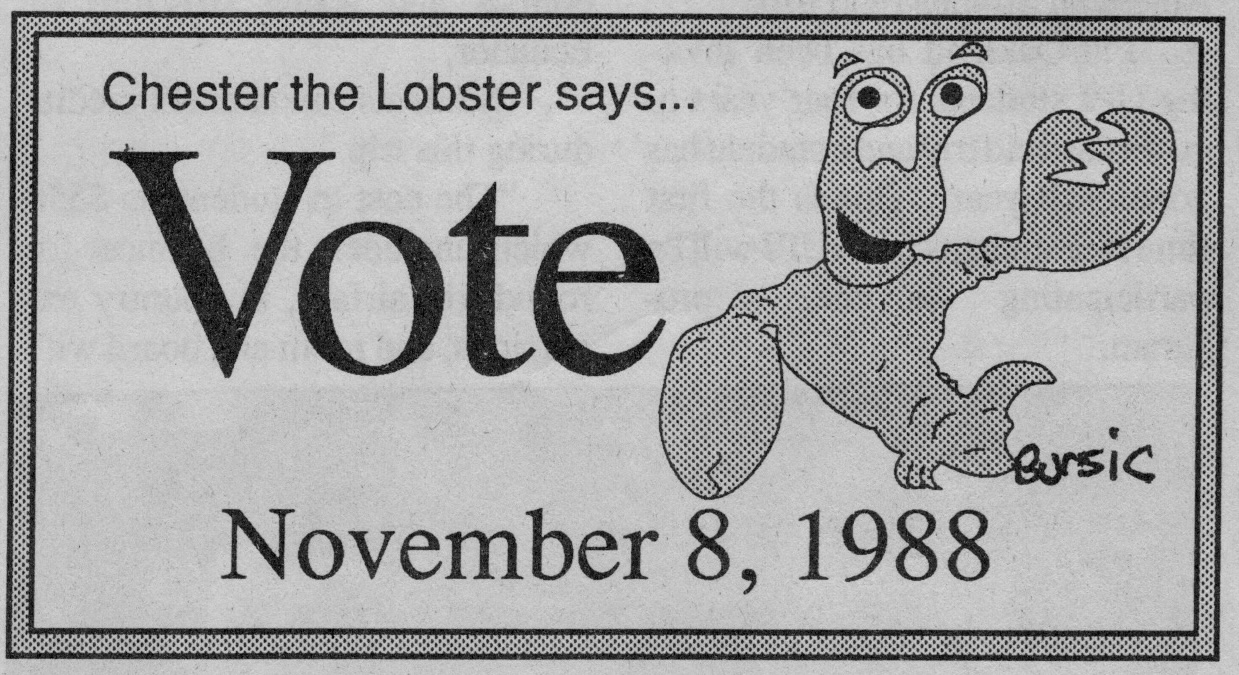
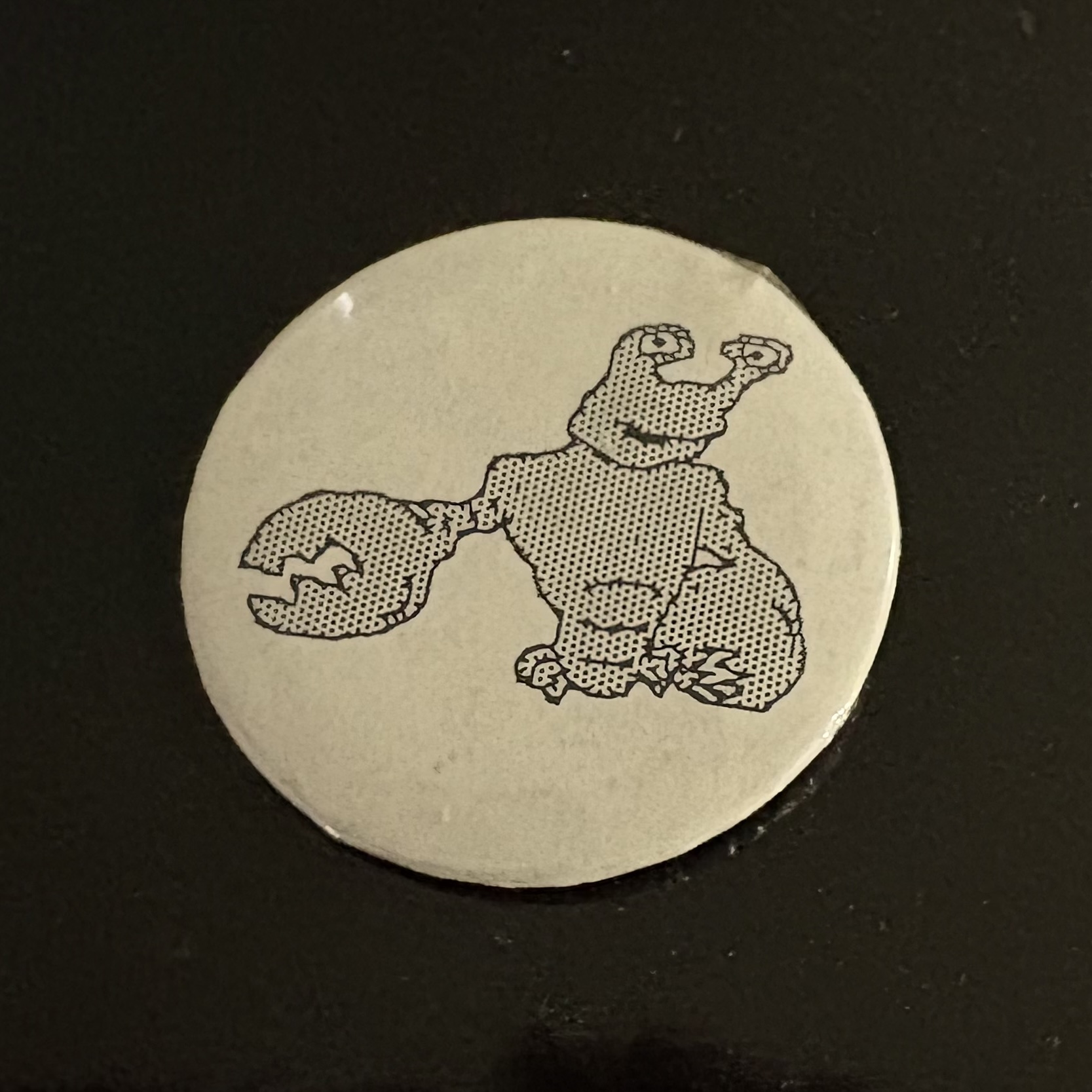
Chester was also used as a brand/mascot to promote the newspaper organization. Advocate members gave out Chester pins to promote readership, he appeared on posters and even had an appearance in a Get Out the Vote PSA campaign.
Technology Used
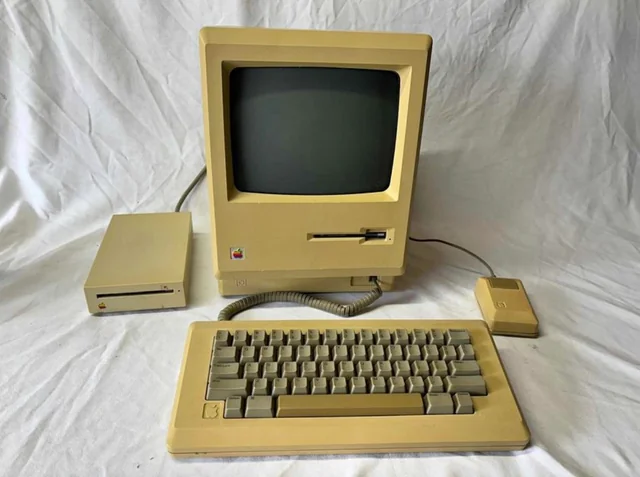
Chester was conceived on a Macintosh 512k (Fat Mac) built in 1985. Mark was given the computer as a gift from his mother when she received a bonus at work. Not to be left out, his sister was given a trip to Brazil.
As a long-time Commodore 64 fan, Mark agonized over the decision to move to the Apple platform. Other computers he considered were the Commodore Amiga 1000 and the Atari ST but the Macintosh was ultimately selected due to it most likely being the technology he would use at college.
Mark brought the Fat Mac with him to the University of Pittsburgh at Johnstown in 1987 to study computer science. He was surprised to be one of the only students to have the luxury of a computer in their room. This made him very popular by allowing students (mostly females) to type papers in the dorm instead of having to walk to the Engineering building. The Johnstown campus was notorious for frigid winters.
Originally Chester was ‘drawn’ in SuperPaint, an upgrade to the basic MacPaint that came standard with the system. SuperPaint allowed some basic object tools as well as pixel drawing using brush and pen tools.
Later Mark moved to Aldus Freehand, the program that ultimately ended up merging with Adobe Illustrator. Freehand had a bezier tool that allowed for drawing using tangent points and curves. Mark loved the idea that the comic was drawn on the fly by the printer using, as he put it, “physics, math and junk.”
Chester was mapped out as a six panel strip with a standard mast head. Mark drew concepts for the artwork by hand using a traditional sketch pad and then redrew them on the screen with the mouse. There were no scanners, tablets or electronic pens used, just the mouse. Because the strip was digital, individual graphics could be reused or repurposed in future strips. Still, working in this way was extremely tedious and time consuming.
“I had to relearn how to draw with a mouse,” says Mark. “When you draw normally you look at your hand and the drawing, but with the computers at that time I had to look at the screen and draw with my hand in another location. It took some time to get the hang of that.”
Mark sometimes took a day or two to just draw the panels, which didn’t include the time it took to think up an idea and attempt to make it funny or ironic. Many of the strips were delivered at the last minute close to 3 AM right before the newspaper layouts were put on the bus for the printer.
Printing the strips was also a problem early on since the newspaper office had yet to fully computerize. Mark was able to negotiate use of an upgraded laser printer in the student life office since his files were large and complicated to render. Mark subsequently spearheaded the computerization of the newspaper when he was promoted to Graphic Editor and then Managing Editor from 1989-1991.